
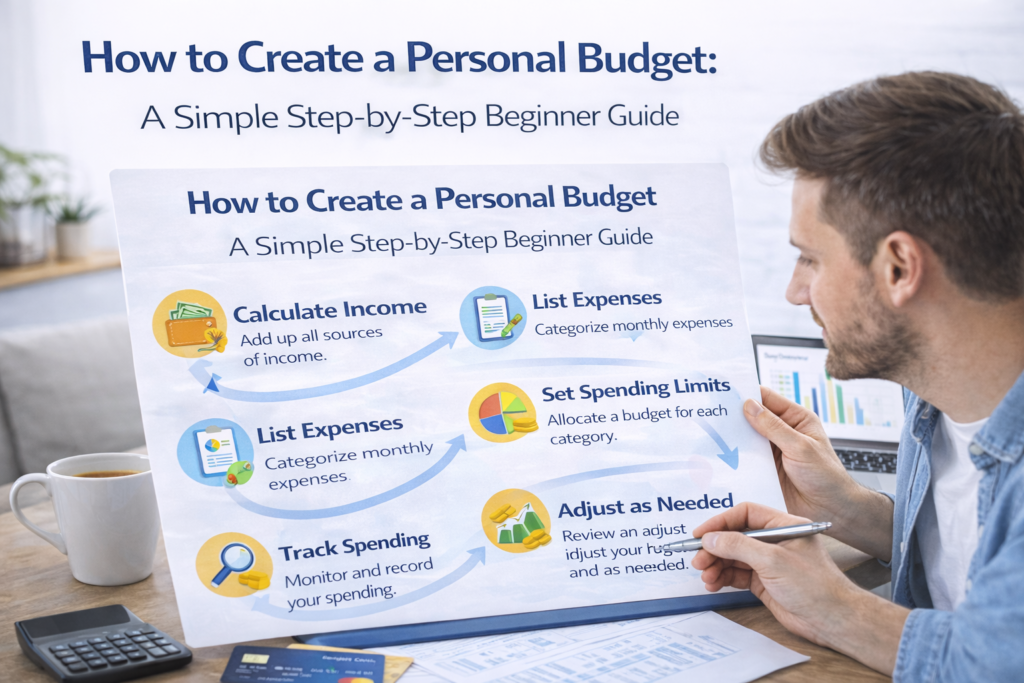
Introduction
If you’re learning how to create a personal budget, the goal isn’t to control every dollar perfectly. A beginner-friendly budget is a simple plan that helps you understand what you can afford, prioritize essentials, and reduce surprises.
This guide shows a practical budgeting process you can adapt to your lifestyle.
Step 1: Know Your Monthly Income
Start with your monthly income range (or average). If income varies, estimate conservatively and adjust as you learn patterns.
Step 2: List Your Essential Expenses
Essentials often include:
- Housing
- Utilities
- Groceries
- Transportation
- Insurance (general category)
- Minimum required payments (if applicable)
Step 3: Identify Flexible Spending
Flexible categories may include:
- Dining out
- Entertainment
- Shopping
- Subscriptions
This step helps you see where you have room to adjust.
Step 4: Choose a Simple Budget Method
Category budgeting (beginner-friendly)
Create buckets:
- Essentials
- Flexible spending
- Savings
- Irregular expenses
Weekly budgeting
If monthly planning feels difficult, set weekly targets and check progress once a week.
Step 5: Include Savings (Start Small)
Saving is a habit. Even a small consistent amount can support preparedness.
Step 6: Plan for Irregular Expenses
List occasional costs (annual renewals, holidays, school costs) and set aside small amounts when possible.
Step 7: Review Weekly and Adjust Monthly
A budget improves with review. The best budget is one you actually use.
FAQ
Do I need to budget if my income is low?
A basic budget can still help by improving clarity and planning.
How detailed should my budget be?
As simple as possible while still being useful.
How often should I review my budget?
Weekly check-ins are helpful; monthly adjustments keep it realistic.
Final Thoughts
Creating a personal budget is about clarity and consistency. Start simple, review regularly, and adjust over time.