
Introduction
Credit utilization is one of the most common terms mentioned in credit education, but beginners often don’t know what it means. You might hear “keep utilization low” without understanding what utilization is, how it’s calculated, or why it changes.
This guide provides credit utilization explained for beginners in clear terms. You’ll learn what utilization measures, how it’s calculated, how billing cycles and reporting timing can influence what you see, and how to keep utilization awareness simple and practical.
What Is Credit Utilization?
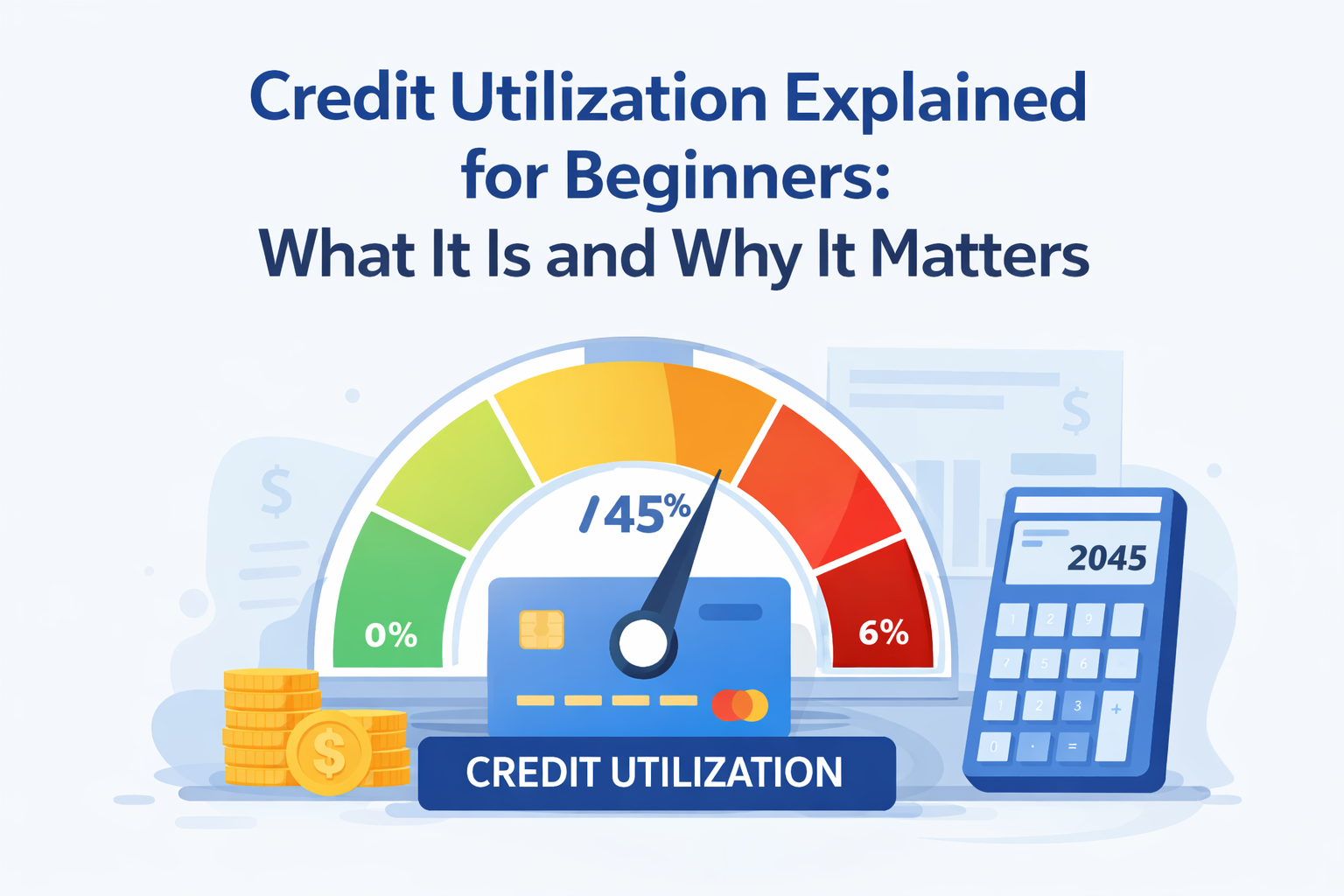
Credit utilization generally refers to how much of your available revolving credit you are using.
It’s most commonly discussed for credit cards, where you have:
- a credit limit
- a balance that changes as you spend and pay
Utilization is typically expressed as a percentage.
How to Calculate Credit Utilization (Simple Example)
Formula:
Utilization = (Balance ÷ Credit limit) × 100
Example:
- Credit limit: $1,000
- Balance: $300
- Utilization: 30%
If you have multiple cards, people sometimes discuss utilization:
- per card, and
- overall across all revolving accounts
Exact scoring impacts depend on the scoring model and the broader credit profile.
Why Credit Utilization Matters (General Credit Awareness)
Credit utilization is frequently referenced because many credit scoring frameworks consider how much revolving credit is being used relative to limits.
Beginner-friendly explanation:
Higher utilization can signal heavier reliance on revolving credit at that moment. Lower utilization can signal more available capacity.
This doesn’t mean you should obsess over daily fluctuations—just understand the concept.
Why Utilization Changes
Utilization can change because:
- purchases post to your account
- payments reduce your balance
- credit limits change
- statement cycles close and balances are captured as snapshots
This is why utilization can look different depending on timing.
Billing Cycles, Statements, and Utilization Timing
Billing cycles matter because statements are snapshots. Depending on reporting practices and timing:
- the balance that appears at statement close may influence what gets reported
- the current balance may be different from the statement balance
Because reporting practices vary, utilization can feel confusing if you only check one number without context.
Beginner takeaway: Understand statements and billing cycles first. Utilization becomes easier after that.
Utilization vs. “Available Credit”
These are related but not the same:
- Available credit: how much you can still spend
- Utilization: percentage of credit limit currently in use
If your available credit is low, utilization is high—because you’re using a larger portion of your limit.
Utilization and Everyday Budgeting
Even if you’re not focused on credit scoring, utilization is useful for budgeting awareness.
If utilization rises unexpectedly, it may signal:
- overspending in one category
- subscription creep
- poor visibility into discretionary purchases
Tracking spending weekly can prevent surprises that push utilization higher than expected.
Beginner Habits for Keeping Utilization Awareness Simple
These are educational routines, not recommendations:
Habit 1: Know your credit limits
Understanding your limits helps you interpret utilization quickly.
Habit 2: Review your statement monthly
Statements show the snapshot balance and due dates.
Habit 3: Track spending weekly
Weekly reviews help you control category drift.
Habit 4: Avoid “set and forget” subscriptions
Recurring charges can steadily raise balances.
Common Beginner Myths
Myth: “Utilization must be 0% to be good”
Not necessarily. Utilization is a concept that varies by model and context. The practical goal is awareness and avoiding surprises.
Myth: “Utilization is the only thing that matters”
Credit scoring models typically consider multiple categories of data.
FAQ
What is credit utilization?
It’s the percentage of your credit limit you’re using, most commonly discussed for revolving credit like credit cards.
How do you calculate utilization?
Balance ÷ credit limit × 100.
Why does utilization change so often?
Because balances and transactions change frequently and billing cycles create snapshots.
Does utilization affect credit scores?
It is commonly discussed as a factor in many scoring systems, though exact impact depends on model and profile.
Final Thoughts
Credit utilization is a simple concept: how much of your available revolving credit you’re using. It matters most as a credit awareness and organization tool. If you understand billing cycles, statements, and your own spending patterns, utilization becomes much easier to manage and far less confusing.