
Buy Now, Pay Later (BNPL) shows up at checkout on almost every major retail site now, usually offering to split a purchase into four equal payments over six weeks with no interest. It feels less risky than a credit card because there's often no interest charge at all. But the model has real failure modes that don't show up until you've already checked out.
How a typical BNPL plan works
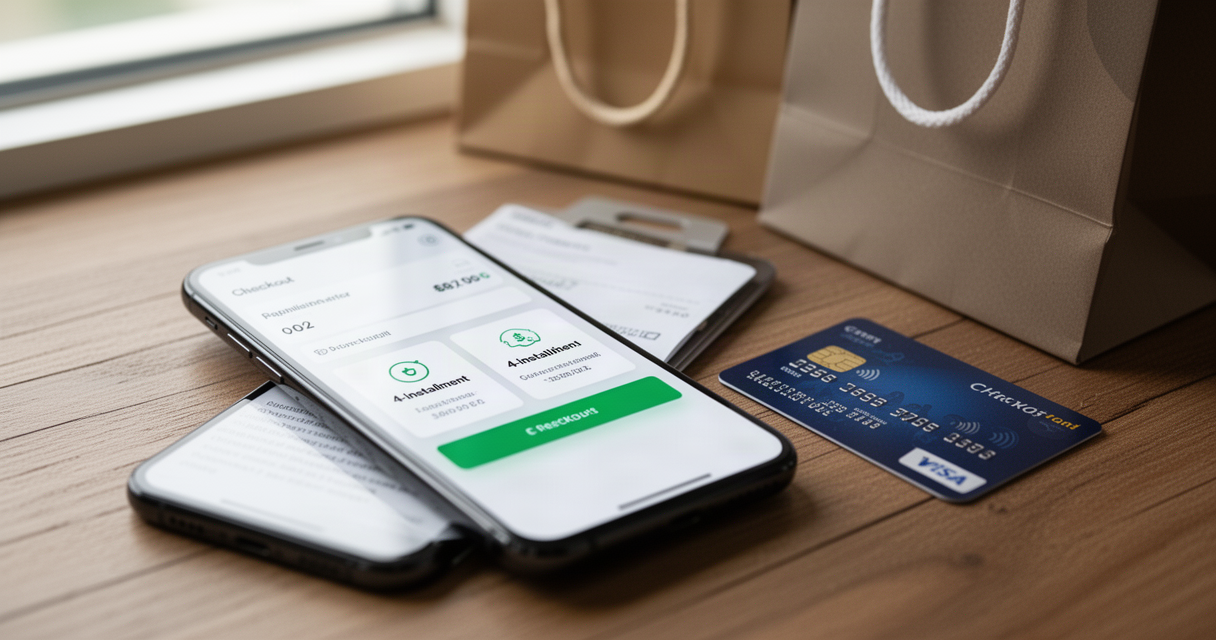
Most short-term BNPL plans split a purchase into four payments: one due at checkout and three more every two weeks after that, with 0% interest as long as every payment is made on time. Longer-term BNPL plans, used for bigger purchases like furniture or electronics, work more like a traditional installment loan — spread over several months with interest attached, similar to a personal loan.
There isn't one single BNPL model
What a soft credit check actually means here
Many short-term BNPL providers only run a soft credit check, which doesn't affect your credit score and approves most applicants in seconds. That accessibility is part of the appeal — and part of the risk, since it removes a friction point that would otherwise make someone pause before taking on more debt.
The late fee structure is where people get hurt
Missing a BNPL payment typically triggers a flat late fee, and some providers can charge that fee more than once if the payment stays unpaid across multiple cycles. Unlike a single missed credit card payment, a missed BNPL payment can also block you from using that provider again until the balance is resolved.
- Late fees are often a fixed dollar amount rather than a percentage, which can make them proportionally large on smaller purchases.
- Some providers report missed payments to credit bureaus, even though on-time payments often aren't reported at all.
- Autopay is usually the default, so a payment can fail (and trigger a fee) simply because your linked card or bank account had insufficient funds that day.
The "stacking" problem
Because approval is instant and each individual plan looks small, it's easy to open several BNPL plans across different retailers and providers in the same month without ever seeing the combined total in one place. Four separate $50-a-cycle plans don't feel like debt individually, but $200 a cycle adds up the same way a loan payment would — it just isn't tracked anywhere that shows you the full picture.
BNPL doesn't show up on a single statement
How BNPL affects your credit score
This varies significantly by provider and is changing as credit bureaus adjust how they handle BNPL data. Some providers report every plan, some only report missed payments, and some don't report at all. Because BNPL isn't yet handled uniformly across scoring models, it's currently more likely to hurt your score (through a missed payment) than to help it.
BNPL vs. a credit card: the real tradeoff
| Factor | Typical BNPL (short-term) | Credit card |
|---|---|---|
| Interest if paid on time | Usually 0% | 0% only during a grace period, if the full statement balance is paid |
| Approval process | Instant soft check, high approval rate | Full application, hard inquiry, credit-based approval |
| Consumer protections | Vary by provider, generally fewer | Strong federal protections (disputes, fraud liability) |
| Visibility of total debt | Scattered across separate apps/providers | Consolidated on one statement |
| Rewards | None | Often cash back or points |
When BNPL genuinely makes sense
For a planned purchase you were going to make anyway, with a payment schedule you've already confirmed you can meet, and no other BNPL balances outstanding, a 0% four-payment plan can be a reasonable cash-flow tool. The risk isn't the product itself — it's using it to buy something you couldn't otherwise afford, or layering multiple plans without tracking the total.
A simple rule before you check the BNPL box
Before selecting a BNPL option at checkout, add up every other BNPL plan you currently have open. If the new plan would push your total scheduled payments above what you could comfortably cover from a single paycheck, treat that as a signal to pay in full or skip the purchase — not a reason to add a fourth plan on top of three.
How BNPL providers make money without charging you interest
If a short-term BNPL plan charges no interest, it's fair to ask how the provider profits at all. The main answer is merchant fees: retailers pay the BNPL provider a percentage of each sale, similar to a credit card processing fee, in exchange for higher conversion rates and larger average order values at checkout. Late fees and, in some cases, interchange revenue on a linked card fill in the rest. This structure is worth understanding because it explains why BNPL options are pushed so aggressively at checkout — the retailer benefits from you choosing it, not just the lender.
Returns and refunds get more complicated with BNPL
Returning an item bought with a credit card is simple: the refund goes back to the card, and any related interest adjusts automatically. Returning an item bought through BNPL can be slower and more manual, since the refund has to be processed by the retailer, then confirmed by the BNPL provider, before your remaining scheduled payments are adjusted or canceled. Some providers still expect you to keep making payments while a return is being processed, refunding you only after the fact. Before buying something you might return, check the specific provider's return policy rather than assuming it works the same as a credit card.
Where BNPL fits into your overall budget
Because BNPL payments are typically biweekly rather than monthly, they don't map cleanly onto a standard monthly budget the way a mortgage, rent, or credit card minimum payment does. Track every open BNPL plan's payment dates directly in your budgeting tool or calendar, not just the total balance, since a payment landing during a tight week is a more common cause of missed payments than the total amount itself.
Set a personal limit on open plans, not just spending
How regulators are starting to treat BNPL
Because BNPL grew quickly outside the traditional credit card and loan framework, regulators in several countries have begun examining how it should be disclosed, reported, and overseen — including questions about standardized fee disclosures and whether short-term plans should require the same underwriting checks as other credit products. Rules in this space are still evolving, so protections that exist today may expand over the next few years as the product matures and regulatory frameworks catch up to its popularity.
A quick pre-checkout checklist
Before selecting BNPL at checkout, run through a short mental checklist: would I buy this today if I had to pay the full amount right now, do I already have other open BNPL plans, and is the payment schedule clearly laid out before I confirm. This thirty-second pause is often enough to catch the situations where BNPL is masking a purchase you'd otherwise reconsider.