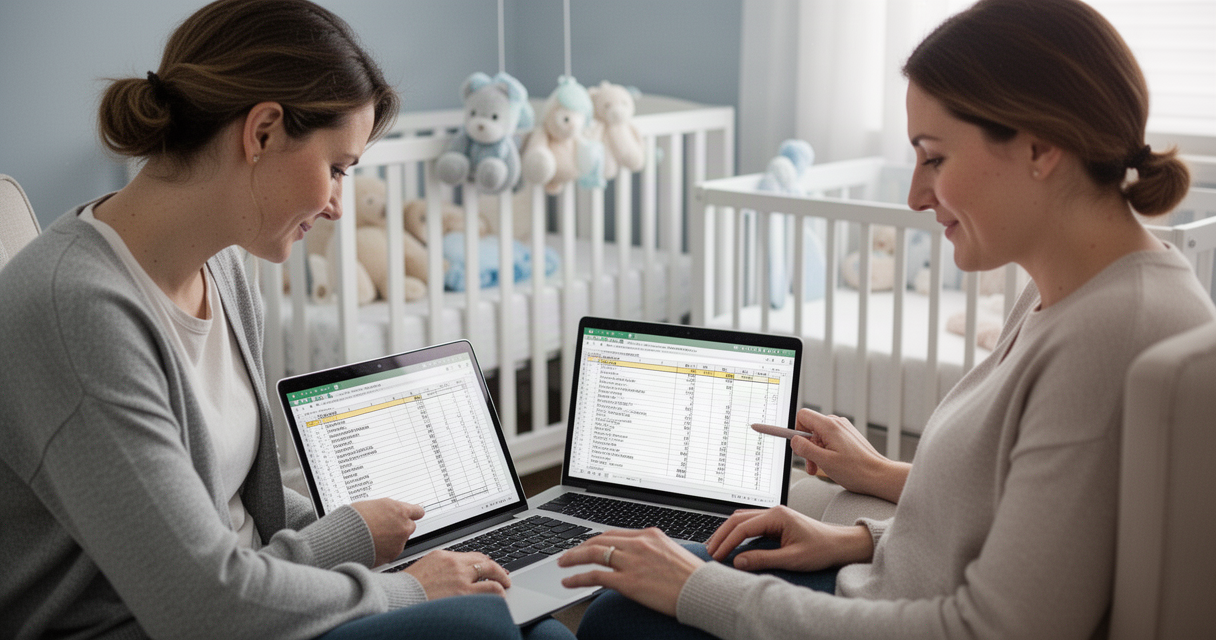

Most new-parent budgeting advice focuses on the visible costs — a crib, a car seat, diapers — while the expenses that actually strain a family budget the most tend to be less obvious: childcare, changes to health insurance, and any gap in income during parental leave. A complete budget needs to account for both.
Start with medical costs, before the baby even arrives
Prenatal care, delivery, and any related hospital stay are often the single largest expense tied to having a baby, and the actual out-of-pocket cost depends heavily on your specific health insurance plan. Call your insurer directly and ask for an estimate based on your plan's deductible, coinsurance, and out-of-pocket maximum well before your due date, so the bill isn't a surprise.
Check your plan's out-of-pocket maximum specifically
One-time setup costs
- Crib, car seat, and other required safety equipment.
- Initial clothing and diaper supply.
- Baby monitor and basic nursery setup.
- A stroller and any other mobility gear you plan to use regularly.
Many of these items can be bought secondhand or received as gifts, which can meaningfully reduce this upfront cost. Car seats are the main exception — check the manufacturer's guidance on buying a used one, since expiration dates and unknown accident history matter for this specific item.
The ongoing cost most new budgets underestimate: childcare
For families where both parents work outside the home, childcare is often the largest ongoing monthly cost tied to having a baby, sometimes rivaling a mortgage or rent payment depending on your area and the type of care chosen (daycare center, in-home care, or a nanny). Research actual local pricing and availability well before your parental leave ends — many facilities have waitlists that start months in advance.
| Category | Timing | Why it's easy to underestimate |
|---|---|---|
| Prenatal and delivery costs | Before birth | Depends heavily on your specific insurance plan's structure |
| One-time baby gear | Before birth | Can be offset by secondhand items and gifts |
| Childcare | Ongoing, after leave ends | Often the largest recurring cost, and pricing varies widely by area |
| Lost income during leave | During leave | Many parental leave policies are partially or fully unpaid |
| Updated life and health insurance | Ongoing | New dependents often require policy or coverage changes |
Plan for the income gap during parental leave
Check your employer's specific parental leave policy well in advance — many leave policies are partially or fully unpaid, or paid at a reduced percentage of your normal salary. If a gap exists, build a dedicated savings buffer specifically for this period, separate from your regular emergency fund, so you're not caught off guard by reduced income right when new expenses are also increasing.
Revisit your insurance coverage
A new baby is a qualifying life event that lets you adjust your health insurance outside the normal enrollment period — use this window to make sure your plan actually covers your growing family adequately. This is also a reasonable time to consider a basic term life insurance policy if you don't already have one, since your dependents' financial needs have changed.
Build in a buffer category
New parents consistently report expenses they didn't anticipate — a size the baby outgrows in weeks, an unexpected medical visit, or a piece of gear that turns out to be necessary despite not being on the original list. Building a flexible buffer category into your budget, rather than a single rigid line-item list, absorbs these surprises without requiring you to rebuild your entire budget every time something unexpected comes up.
Redo the categorization exercise after the baby arrives
The budget you build during pregnancy is a starting estimate, not a final answer. Revisit it about two to three months after the baby arrives, once you have real spending data on formula, diapers, childcare, and everything else, and adjust the plan based on actual numbers rather than initial guesses.
Ongoing monthly costs beyond childcare
Beyond childcare, ongoing costs include diapers and formula or feeding supplies, pediatric visits and any related copays, and a steady stream of clothing as your baby grows out of sizes every few months. None of these individually is enormous, but together they add a meaningful, recurring line item to a household budget that wasn't there before.
Dependent care benefits worth checking for
Some employers offer a dependent care flexible spending account, letting you set aside pre-tax income specifically for childcare expenses, which can meaningfully reduce your effective childcare cost. Ask your HR department directly whether this benefit is offered and how the enrollment window works, since it's often tied to a specific open enrollment period rather than available any time.
Setting up savings for the future, even in small amounts
While the immediate months around a new baby are often about managing new expenses, it's worth setting up even a small, automatic contribution toward a dedicated education or general savings account early, since starting small and consistent from the beginning tends to matter more over time than the exact dollar amount of any single contribution.
| Category | Notes |
|---|---|
| Diapers and feeding supplies | A steady, predictable monthly cost in the early years |
| Pediatric visits and copays | More frequent in the first year due to routine checkups |
| Clothing | Frequent replacement as your baby grows |
| Childcare | Often the largest recurring cost once parental leave ends |
Adjusting your budget as your baby grows
Costs shift significantly across the first few years — heavy diaper and formula spending in the earliest months gradually gives way to solid food, larger clothing sizes, and eventually preschool or early education costs. Treat your baby budget as something to revisit every few months in the first year rather than a plan you set once and leave unchanged, since the specific categories driving your spending will keep changing.
Involving both partners in the plan from the start
For couples, sitting down together to review the full picture — medical costs, gear, childcare research, and the leave income gap — before the baby arrives helps avoid one partner feeling solely responsible for tracking every new expense once things get busy. A shared, written plan, even a simple one, makes it easier to adjust together as real numbers replace initial estimates in the months after the baby is born.
Support programs worth checking for lower-income families
Various government assistance programs exist specifically to help with costs like nutrition, healthcare, and childcare for qualifying families, and eligibility thresholds are often higher than people assume. Checking eligibility for these programs before ruling them out, even if you're not certain you'd qualify, is a worthwhile step that costs nothing and can meaningfully offset some of the categories covered earlier in this guide.